
- AI transformation in field service
- discipline for AI
- human-in-the-loop AI
- information architecture for AI
No AI Without IA: IBM’s Blueprint for Data Discipline
Key Takeaways:
Jessica Murillo of IBM Technology Lifecycle Services made a clear case at Field Service Next West 2026: without strong data discipline for AI, even the most advanced models will accelerate failure rather than success.
- No AI Without IA: Information Architecture is the foundation for any meaningful AI deployment.
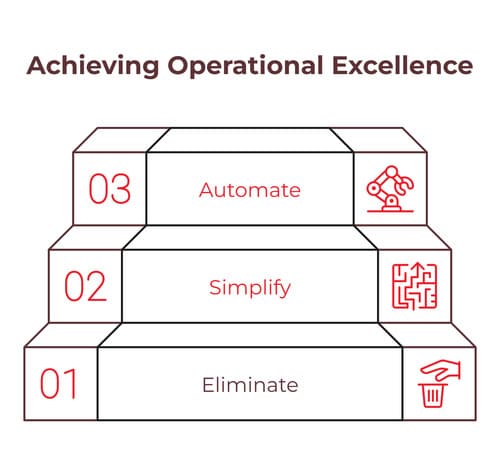
- Eliminate, Simplify, Automate: Only valuable, repeatable processes are touched by technology, and they are done in a strict hierarchy.
- Data is not “the new oil” but “crude oil”: Raw data is useless until it is normalized, structured, and purposefully gathered.
- Trust must be earned: Veteran techs, not new hires, are typically the most difficult to convert to automation.
- Closed-loop autonomous resolution is real, but only when AI readiness in field service is based on a disciplined foundation.
Why is data discipline so important before deploying AI?
Because AI applied to a broken process will only speed up your failures. Jessica Murillo of IBM Technology Lifecycle Services argues that without standardization, normalized data, and trust, any technology investment becomes a multiplier of existing weaknesses rather than a path to value.
AI is only as good as the data feeding it. Discover how Praxedo’s field service management platform helps you build that foundation through structured work order capture and deep ERP/CRM connectors that keep your data clean from day one.
The Full Story
“Standardization, data discipline, and trust are must-haves before you can start throwing technology or AI into your operations.”
This warning from Jessica Murillo of IBM Technology Lifecycle Services (TLS) served as the cornerstone of her presentation on preparing for the AI revolution.
The Complexity Trap
IBM TLS operates at a staggering global scale, supporting thousands of products in over 100 countries. Before centralizing their strategy, they were hampered by decades of siloed tools and “regional practices” that made sense in local markets but created a fragmented, unscalable mess at the corporate level.
Murillo argued that AI is not a magic wand for broken processes. In fact, if you throw AI at a fractured foundation, it will only speed up your failures or expose existing weaknesses. The IBM approach follows a strict hierarchy of improvement:
- Eliminate: Remove anything that doesn’t add value.
- Simplify: Complexity kills speed; workflows must be streamlined.
- Automate: Only once a process is repeatable and simplified should technology be applied.
This hierarchy is the practical blueprint for genuine AI transformation in field service, where the goal is not to bolt AI onto chaos but to remove chaos so AI can work.
Data as “Crude Oil”
While many claim data is the new oil, Murillo views it as crude oil. Raw data is worthless unless it is architected, structured, and collected intentionally. To be useful to AI, data must be normalized so that every stakeholder in the room interprets the numbers consistently. That’s the essence of information architecture for AI: ensuring the underlying data model is as deliberate as the model that consumes it.
Earning the Technician’s Trust
The hardest part of any AI transformation isn’t the technology, it’s the people. At IBM, resistance didn’t come from new technicians; it came from veterans with 30+ years of experience. Trust in automation must be earned by providing systems with the right context and, crucially, by knowing when not to act. By bringing a human into the loop for severe or complex issues, the system ensures the expert’s time is spent on what truly matters. This human-in-the-loop AI approach is what turns long-tenured technicians from skeptics into champions.
The AI Transformation in Action

When the foundation is solid, the results are measurable. IBM’s workflow now allows machines to “talk back” to the cloud. In many cases, a machine can send a signal, the system can diagnose the issue using a digital knowledge base, and the problem can be fixed automatically within minutes without a human ever touching a keyboard. This level of precision is only possible when the information architecture for AI is as robust as the AI itself, supported by a human-in-the-loop AI layer for the edge cases that demand expert judgment.
Conclusion
IBM’s “No AI Without IA” thesis is a useful reframe for any service organization racing to deploy AI. The lesson isn’t to slow down on AI ambition; it’s to invest first in the unglamorous work of standardization, normalized data, and trust-building. AI transformation in field service doesn’t begin with a model selection. It begins with data discipline, a clean information architecture, and the patience to earn buy-in from the technicians whose expertise the system is meant to amplify. Done in that order, AI readiness in field service becomes a strategic advantage rather than a stalled experiment, and the disciplined foundation that data discipline for AI demands becomes the multiplier that every future AI initiative depends on.
Request a demo with Praxedo to see how a unified field service platform helps you build that foundation, one structured work order at a time.
FAQs:
1. What does “No AI Without IA” mean?
It means you need a strong Information Architecture before deploying AI. Without normalized data, standardized processes, and a clean foundation, AI will accelerate failures rather than fix them.
2. Why does Jessica Murillo call data “crude oil”?
Since raw data is not usable in its natural state, it needs to be intentionally designed, normalized, and organized so it can be interpreted consistently across systems and stakeholders to create real value.
3. What is the “Eliminate, Simplify, Automate” framework?
IBM’s three-step hierarchy for any process improvement: eliminate what doesn’t add value, simplify what is left, and then automate or use AI for repeatable processes.
4. Why are veteran technicians often resistant to AI?
Because they’ve spent decades developing expertise that automation appears to threaten. Trust is earned when AI provides the right context and knows when to defer to a human expert.
5. What does human-in-the-loop AI look like in practice?
It’s a model in which AI can perform routine diagnostics on its own, but escalate more complex or severe problems to a human expert. This safeguards accuracy and frees up experts to concentrate on high-value problems.
6. How can a company start its AI transformation in field service?
Begin with data discipline. Audit your processes, eliminate waste, normalize your data, and only then layer in AI tools. The order matters more than the tooling.
