- Predictive Insights
- Sustainability for Water Utilities
- utilities
Ensuring Efficiency and Sustainability in Water Distribution with Field Service Management Software
Key Takeaways:
Here is how FSM software can lead to operational efficiency and long-term water sustainability:
- FSM software assists water utilities in modernizing field operations to deliver services faster, smarter, and more sustainably.
- Real-time insights can be used to make improved decisions regarding maintenance, scheduling, and resource allocation.
- Digital workflows minimize waste, enhance compliance, and facilitate effective water management throughout the organization.
- The utilities obtain the means to achieve sustainability goals and create long-term resilience in their water supply systems.
- Solutions like Praxedo enable ground teams to accomplish more with less and safeguard our most precious asset.
Today’s water utilities are under more pressure than ever. They must provide clean and safe water to the increasing population while minimizing environmental impact, working efficiently, and remaining in line with changing regulations. All these, particularly aging infrastructure and increased demand, have necessitated sustainability and water distribution efficiency to be not only a priority, but a necessity.
The good news? Technology is coming up to the challenge. Water utilities are reinventing their operations, teams, and infrastructure with the help of field service management (FSM) solutions.
With the digitization of field workflows and the ability to provide real-time insights, utilities can make significant leaps toward creating a more efficient and sustainable water supply without compromising the reliability of their services.
What Are the Challenges of Efficient and Sustainable Water Distribution?
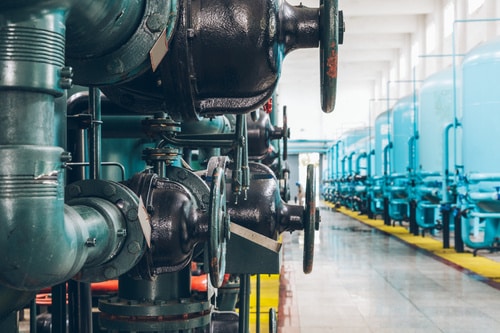
Nevertheless, despite the best efforts, the majority of water utilities continue to face significant challenges in their attempts to modernize and optimize their operations. These issues render water distribution efficiency and sustainability hard to accomplish at scale:
- Old infrastructure: Most of the pipelines and valves are decades old, and they are prone to failure, high maintenance expenses, and water wastage.
- Disjointed field operations: In the absence of centralized systems, field workers cannot be efficiently and reactively dispatched and tracked.
- Poor visibility: Utilities struggle to track field operations in real-time, which hinders the detection and resolution of issues.
- Resource constraints: Budget constraints and staffing shortages prevent proactive planning and investment.
- Compliance pressures: There is a growing pressure of stricter environmental regulations that require proper reporting and prompt action.
- Geographical complexity: It serves both urban and rural regions, which are not easily reachable by a sustainable water supply.
- Reactive maintenance: Repairs occur after failure, not before, with no predictive tools, resulting in increased costs and environmental impact.
It is these challenges that are prompting utilities to seek digital solutions, such as FSM software, to bridge the performance and sustainability gap.
Why Water Utilities Must Prioritize Water and Sustainability Goals
Climate change is putting pressure on water resources, and population growth is putting pressure and strain on infrastructure. In the meantime, society and regulatory bodies are expecting improved resource management, transparency, and environmental accountability.
By not modernizing, water utilities not only risk operational collapse but also fail to access opportunities to enhance service quality, attract funding, and meet sustainability standards.
The use of tools that facilitate efficiency and minimize environmental impact is no longer a choice, but a necessity.
How FSM Software Helps Build Sustainable Water Management Practices
FSM software provides a digital foundation for utilities to transition from reactive to proactive operations. Rather than reacting to issues, utilities on FSM platforms can plan inspections, manage assets, and monitor real-time performance. This enables quicker and more informed decision-making, minimizing resource waste.
This lean methodology directly contributes to sustainable water management practices through conservation, reduced carbon emissions from travel, and the prolongation of asset life. It also enables utilities to centralize data and record all service activities, which forms an audit trail that facilitates environmental reporting and accountability.
The FSM solution offered by Praxedo has become a popular platform among water utilities that seek to incorporate these sustainability-oriented features into their operations.
Real-Time Field Operations for Efficient Water Management
Lack of real-time visibility is one of the greatest obstacles to effective water management. When utilities are unable to see what is happening in the field, they cannot make timely decisions, and delays often result in increased costs and service interruptions.
FSM software addresses this by providing operations managers with real-time information on the location of technicians, job status, and asset performance. Such visibility enables improved dispatching, prevents unnecessary trips, and accelerates the resolution of issues. For example, when a leak is reported, the nearest technician with the appropriate skill set is automatically dispatched, which saves hours of manual coordination.
Field workers also benefit. They can get all the information they need, including job instructions, asset history, and location maps, on their device through mobile apps. They can post progress in real-time, share photos, and even capture electronic signatures, which are all synchronized back to the central system. This removes paperwork and keeps office teams informed.
Through these capabilities, utilities can significantly reduce water loss, minimize operational inefficiencies, and deliver more responsive service, all of which are essential elements of effective operations management.
Enabling Sustainable Water Delivery with Smarter Field Coordination

One of the most challenging tasks for any utility is reaching remote communities or areas with poor infrastructure. To deliver water to these areas in a sustainable manner, it is necessary to be smart, coordinated, and agile.
This is made easier with FSM software. Here’s how:
- Service vehicles consume less fuel and produce fewer emissions due to optimized routing.
- Priority scheduling is used to make sure that time-sensitive jobs in high-risk areas are never postponed.
- Paperless reporting allows real-time documentation and compliance monitoring.
- Live updates will keep managers updated on service disruptions or delays in remote areas.
Enhancing Accountability and Sustainability for Water Utilities Through Centralized Data
The possibility to gather, analyze, and report field data in real-time is one of the strongest advantages of FSM platforms. This functionality is game-changing for water utilities concerned with sustainability.
Rather than using disjointed reports or manual records, FSM software such as Praxedo offers centralized dashboards where all field operations, including inspections, repairs, meter readings, and more, are automatically logged and time-stamped. Such detail simplifies the process of adhering to environmental standards, responding to audits, and meeting internal performance standards.
Modernizing Water Treatment with Field Service Software
It is not an easy task to maintain a sustainable water treatment plant. Treatment facilities are characterized by complex equipment, chemical processes, and stringent quality standards, all of which can become bottlenecks unless handled appropriately.
The FSM technology is crucial in this case, as it digitizes the inspection process, automates task distribution, and provides traceability. For example, when a technician detects a filtration anomaly, they can immediately record the problem, initiate a service workflow, and send supporting data, all using a mobile device.
According to a report, “U.S. water systems collectively lose approximately 6.75 billion gallons of treated drinking water daily” (Bluefield Research).
Using tools such as Praxedo, treatment facilities can transition to a predictive maintenance model, which will make operations safer, more efficient, and more sustainable.
Laying the Groundwork for a Sustainable Water Supply System
It does not take a day to create a really sustainable water supply system. It requires careful planning, consistent maintenance, and smart use of data. Under FSM technology, utilities can have a long-term perspective on their operations.
Each work order, inspection, or service call recorded in the FSM platform is added to a growing database that can be utilized for trend analysis, forecasting, and planning. Managers can identify at-risk assets, allocate budgets more intelligently, and prioritize projects based on actual system performance, rather than relying on guesswork. According to a report, “US nation’s drinking water utilities need $472.6 billion in infrastructure investments over the next 20 years” (EPA).
Through the combination of FSM and broader asset management approaches, utilities companies can ensure that their infrastructure is resilient, flexible, and environmentally friendly over the long term.
How to Make Water Supply More Sustainable Using Field Data and Predictive Insights

The first step to making water supplies more sustainable is to gain visibility, and FSM software offers that at scale. These platforms go an extra mile using predictive analytics. With historical data, FSM tools can suggest the best maintenance periods, identify abnormal trends, and predict potential risks before they become critical. This enables preventive measures, minimizes emergency expenses, and maintains the quality of service.
This data can be a potent decision-making tool when combined with sustainability KPIs. The utilities can determine what is working, what needs to be changed, and how they can move closer to their water supply sustainability goals.
Praxedo enables water utilities to transform field data into strategic action—bridging the gap between daily operations and long-term sustainability goals.
Conclusion
Water utilities no longer have the option of prioritizing sustainability and efficiency; rather, it is now a core part of their foundation. As pressure mounts on the issues of climate impact, regulatory compliance, and public trust, utilities must take decisive action.
One of the most viable, scalable ways to begin is with FSM solutions. FSM platforms enable real-time decision-making that yields long-term results, whether it involves optimizing technician performance or digitizing compliance and waste reduction.
As proven by solutions like Praxedo, the path to a smarter, more sustainable utility begins not in the boardroom—but in the field. Contact us to learn how we can transform your water distribution field operations today.
FAQs:
1. What are the biggest challenges in achieving sustainable water distribution?
The aging infrastructure is one of the most challenging aspects to cope with—most utilities have to deal with pipes and systems that are decades old. Combine this with the absence of real-time visibility and coordination in the field, and it becomes extremely difficult to be ahead. FSM software helps bridge those gaps by enhancing team responsiveness, scheduling, and maintenance, making the transition to sustainability far more feasible.
2. How does FSM software support efficient water management?
In its simplest form, FSM software removes confusion in field operations. It automates scheduling, simplifies communication, and provides managers with real-time information about what is happening on the ground. The result? Field teams drive less, wait less, and focus on actual problems more, resulting in more efficient resource utilization and a significant increase in effective water management.
3. Can FSM tools improve water treatment plant sustainability?
Absolutely. You cannot just have reliable machinery in a sustainable water treatment plant; you need predictable maintenance and no guesswork. FSM software enables this by structuring inspections, monitoring equipment performance, and ensuring that all documentation is maintained to comply. It provides operators with a sense of peace and helps keep the system running smoothly and efficiently.
4. How do utilities use FSM data to make water supply more sustainable?
The utilities are sitting on a goldmine of field data—but it only works when you can actually use it. Using FSM software, that data becomes actionable insights: what areas require improvement, which technicians are overworked, and where you are losing water. In the long run, this enables teams to be more strategic in planning and take significant steps towards developing a sustainable water supply system that can withstand pressure.

Our similar articles.
-
- Field Service Software
- telecommunications
- best-of-breed technology
- utilities
White paper: Driving efficiency and longevity: Best-of-breed software for telcos and utilities
September 29, 2022
-
- energy and utilities
- utilities
- fsm
- AI in field service management
Scheduling Software for Utilities Companies: How to Optimize Workflows and Resources
September 15, 2025
-
- Field Service Management
- Work Order Management
- transmission lines
- utilities
Improve the process for transmission line installations: Tips for utilities companies
October 11, 2022