- AI in field service management
- electrical business software
- Electrical contractor scheduling software
- fsm
- smart electrical
Smart Software Solutions to Simplify Electrical Business Management
Key Takeaways:
Here’s a quick overview of how the right electrical business software can transform your operations:
- Integrates field, office, and customer communication on a single platform.
- Automates scheduling, dispatch, invoicing, and job tracking.
- Gives technicians mobile access and real-time updates.
- Improves service quality, responsiveness, and visibility.
- Scales with your business from startup to enterprise level.
Operating an electrical business nowadays is like managing a thousand moving parts: job requests, dispatching, technician availability, invoicing, inventory, and more. Things can fall through the cracks. Perhaps a technician was unable to get a job because the dispatch board failed to update promptly. Or maybe the invoice was late because paperwork was lost in a truck.
These minor inefficiencies accumulate. And when you are working with old-fashioned tools or attempting to piece together spreadsheets, text messages, and sticky notes, you are not only wasting time, but you are also missing out on opportunities to develop.
Electrical business management software comes in at that point. With the right tools in place, businesses can become more proactive than reactive, stop putting out fires, and begin providing better service more reliably.
From the Field to the Office: Real-Time Coordination That Scales
Ask any electrician what delays on the job, and you’ll probably hear: miscommunication. Miscommunication isn’t just frustrating; it’s expensive. Research shows that “poor communication represents an annual cost of $17 billion to the US construction industry.” (PlanGrid)
The situation is the same across all industries. Maybe the job details were not clear. Or maybe the parts they needed weren’t on the truck. These small breakdowns create big setbacks for your team and your customers.
The beauty of modern electrical business software is that it can connect the field and the office in real time. Electrical contractor scheduling software allows dispatchers to plan jobs with drag-and-drop ease. Technicians get updates in real time through mobile apps, complete with directions, job instructions, and even customer notes.
It’s not just about cutting admin time; it’s about giving your team the tools to deliver great service without constantly checking in. For managers, this means visibility across projects, tech productivity, and job status, all in one dashboard. With platforms such as Praxedo, this level of coordination becomes part of daily operations rather than a wish list item.
Building a Fully Connected Workflow
Unless your scheduling tool can communicate with your billing system, or your CRM can show the real-time job status, you are likely to spend more time integrating systems than serving customers.
That’s why a true electrical company management software solution needs to unify everything, not just the schedule. The most potent tools combine dispatch, scheduling, job tracking, client communication, invoicing, and reporting.
Electrical contractor business dispatch software will allow your office to assign jobs within seconds, track technician locations and performance, and ensure nothing falls through the cracks. When these systems connect with CRM tools and accounting platforms, billing and reporting become automated, not a week-long admin nightmare.
And with Praxedo, these integrations don’t require custom code or expensive add-ons. It’s built to support the flow of your operations, not interrupt it.
Fast-Growth Electrical Companies and the Need for Scalable Solutions

The systems that keep you going through the day can begin to drag you down as your electrical business grows. What was successful with a group of three may fail with a group of 12 or 50. Overlapping schedules, booked-in technicians, missed appointments, and slow billing may turn into everyday headaches.
This is why it is important to select electrical contractor software with built-in scalability for small businesses. The goal isn’t to overhaul everything once you grow; it’s to implement systems that grow with you. Look for cloud-based platforms that can support growing work orders, more technicians, and added complexity without requiring a separate tool for each function.
With Praxedo, for example, small businesses can start lean, maybe just with scheduling and dispatch, and expand later to include customer portals, maintenance planning, inventory tracking, and advanced reporting.
Growth is hard enough. Your software shouldn’t make it more difficult.
Elevating Customer Experience with Smart Software
In the modern world, customers not only want to receive timely service. They desire updates, transparency, and professionalism in all touchpoints.
Modern electrical contractor business management software plays a huge role in shaping that experience. With automated appointment confirmations, live technician tracking, branded service reports, and digital signatures, your business presents a polished, responsive image, even if you’re a small team.
These tools help businesses track customer history, preferred scheduling times, and recurring service needs. That means techs show up informed, prepared, and ready to deliver a better service every time.
When you use software that enhances the customer experience, you’re not just closing jobs. You’re building loyalty.
Data-Driven Decisions: Visibility That Fuels Better Operations
Among the largest disparities between typical electrical companies and those that perform well? Data.
With paper logs or disconnected applications, you can hardly have a complete picture of how your operation is performing. However, with the right electrical business management software, you can access actionable insights immediately on the dashboard.
You’ll know:
- Which techs are closing the most jobs
- How long each job type typically takes
- Where delays are happening in the field
- Which customers are due for follow-ups
Such visibility enables managers to make more intelligent decisions, redistribute workloads, and predict demand more precisely. Reports are no longer merely about the past; with tools such as electrical contracting business software, they are also a means to create the future.
Praxedo simplifies these insights and makes them readily available. Data is your secret weapon, whether you are optimizing technician performance or adjusting schedules based on demand trends.
What to Look for in the Solution
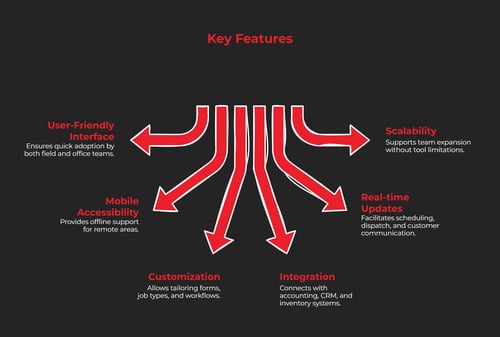
There are so many platforms out there that it can be difficult to know which one is actually designed to meet your needs. Others are too simple to scale. What should you prioritize when selecting electrical company management software?
Here’s what truly matters:
- User-friendly interface that field and office teams can adopt quickly.
- Mobile accessibility with offline support for remote areas.
- Forms, job types, and workflows that can be customized.
- Ready to integrate, particularly with accounting, CRM, and inventory systems.
- Scheduling, dispatch, and customer communication with real-time updates.
- Scalability, so your team can expand without tools.
If your team is small but growing, it’s worth looking at platforms like Praxedo, which offer modular features tailored to both small teams and enterprise contractors. You don’t need a massive IT budget to get big results.
The Human Factor: Supporting Team Buy-In and Change Adoption
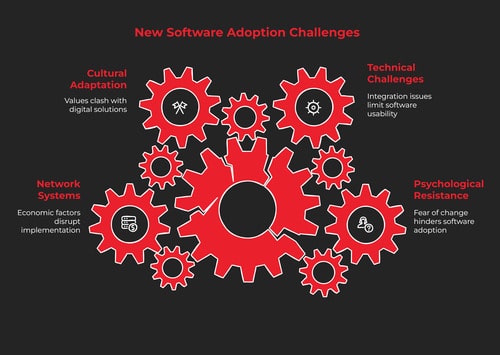
Here’s the truth about adopting new tech: It’s not just a software decision, it’s a people decision.
Even the most robust electrical contractor dispatch software will fall short if your team isn’t fully on board. Here are the risks and how to mitigate them:
Psychological Resistance to Change
The psychological resistance to change in field teams is one of the major internal individual risks. The transition to new software may be overwhelming, particularly for employees accustomed to the old ways of doing things. This opposition is based on fear of the unknown, the perceived threats to employment, and the familiarity of routine. To address these issues, it is necessary to foster an open culture of communication, highlight the benefits of the changes, and provide training that demonstrates the opportunities for personal and professional development.
Technical Challenges and Software Integration
At the individual-exterior level, technical obstacles arise when integrating new software with existing systems. The risks include compatibility, data migration, and differences in user proficiency with the new tools. To reduce these risks, it is essential to invest in overall IT support, perform a thorough evaluation of the software, and select convenient, smooth platforms. Pilot programs can also be used to identify potential problems before a large-scale implementation.
Cultural Adaptation and Values
Organizational culture may be a barrier to change due to shared values that emphasize old-fashioned work processes instead of new, digital ones. The ability to change these shared values to a vision that fosters innovation and technological development is critical to the success of software adoption. The collective mindset towards acceptance and readiness to change can be aligned by fostering a culture of continuous improvement, inclusive discussions, and user participation in co-design.
Network Systems and Economic Considerations
In a collective-exterior perspective, the economic implications and systemic considerations of new software solutions should be taken into account. The risks are higher implementation costs, possible service delivery disruptions during transitions, and scalability and return on investment. The best mitigation measures include open budgeting, gradual implementation to reduce the impact, and effective communication regarding the financial impact and economic advantages, such as efficiency and competitive advantage.
Conclusion
Electrical contractors are no longer mere tradesmen. You are service providers, logistics managers, project planners, and, increasingly, technology-driven businesses.
The right electrical contractor scheduling app or full-suite electrical contractor business management software will give you the ability to work with greater accuracy, professionalism, and speed. You empower your staff to focus on what matters most: producing high-quality work and building strong customer relationships.
Electrical businesses of all sizes are using platforms such as Praxedo to make technology a real competitive edge. You can streamline dispatch, provide techs with more tools in the field, or extract insights from live dashboards, but you are positioning your business to grow, and you are not like the rest.
To see how it all works together, contact us or book a demo and explore how Praxedo fits into your workflow.
FAQs:
1. What is electrical business software used for?
Electrical business software supports job scheduling, dispatching, field service, customer communication, and billing in a single, centralized system.
2. How does electrical contractor scheduling software improve efficiency?
Electrical contractor scheduling software minimizes delays and enhances technician productivity by automating job assignments, route planning, and real-time updates.
3. Can small businesses benefit from electrical service management software?
Absolutely. Small business electrical contractor software helps minimize administrative tasks, accelerate billing, and deliver improved services without high overhead.
4. What’s the difference between dispatch and scheduling tools for electrical contractors?
Electrical contractor dispatch software allocates jobs on the fly, whereas electrical contractor scheduling apps handle larger calendars and availability planning.

Our similar articles.
-
- energy and utilities
- utilities
- fsm
- AI in field service management
Scheduling Software for Utilities Companies: How to Optimize Workflows and Resources
September 15, 2025
-
- fsm
- AI in field service management
- Heavy equipment
- heavy equipment management software
How Software for Equipment Dealers Can Streamline Operations
November 18, 2025
-
- fsm
- ai field service management
- Commercial Equipment
- FSM for commercial equipment companies
Commercial Equipment Business Software: A Way to Reduce Cost
December 30, 2025